
Seollal is Korea’s Lunar New Year and one of the country’s most important traditional holidays. Along with Chuseok, it is the biggest family-centered celebration of the year. Unlike the Western New Year, Seollal is not about loud parties or fireworks. Instead, it focuses on family reunion, honoring ancestors, and wishing each other good fortune. Because of this, it also has a huge impact on travel, businesses, and daily life across South Korea.
Koreans celebrate Seollal based on the lunar calendar, so the date changes every year. In South Korea, the holiday usually lasts for three days: the day before Seollal, Seollal Day itselfو the day after. This gives families enough time to travel, prepare food, and enjoy their traditions together. In 2026, Seollal will be on Tuesday, February 17, and the public holiday will last from Monday to Wednesday, February 16 to 18.
Seollal is mainly about showing respect and starting the year in a good way. Families come together to honor their ancestors through a ritual called charye, where food is placed on a table, and everyone bows together. After that, younger family members do sebae, a deep bow to their elders, and they say, ‘Saehae bok mani badeuseyo (Please receive lots of New Year’s luck)’. Elders answer with blessings and often give children New Year money, called sebaetdon. These traditions show how important family, respect, and gratitude are in Korean culture.
Food is also a big part of the holiday. You will find the most famous dish on that occasion is tteokguk, a soup made with sliced rice cakes. People believe that eating it helps welcome the new year and symbolically makes you one year older. Other common foods include dumpling soup, savory pancakes called jeon, and traditional sweets known as hangwa. Since many of these dishes take time to prepare, families usually start cooking well before Seollal.
At home, families relax after the main rituals and spend time together. They usually play games like yutnori و jegichagi, and fly kites to send away bad luck. And they often wear colorful hanbok, Korea’s traditional clothes, especially children and elders.
During Seollal, government offices, banks, and many small restaurants close, but most tourist places stay open. In fact, large stores, palaces, museums, and other popular attractions often remain open and may even hold special cultural events. So, you can still enjoy the holiday atmosphere as a visitor.
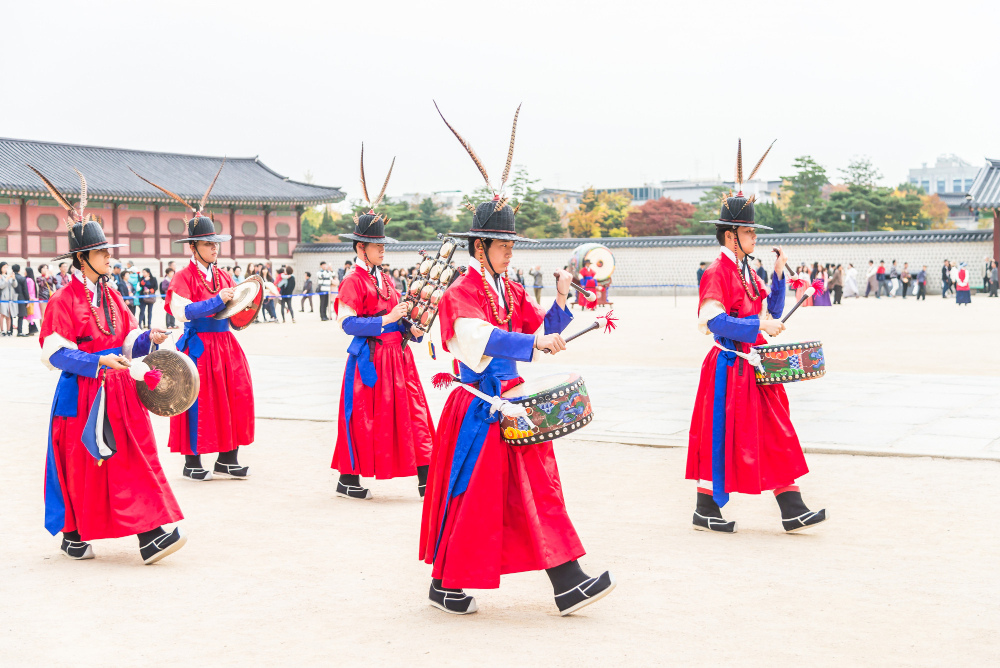
Because of this, you can watch folk performances, try traditional games, and join cultural programs at places like Gyeongbokgung Palaceفإن National Folk Museum, Namsangol Hanok Villageو Korean Folk Village near Seoul. Even though the cities may feel quieter, these cultural spots become lively and colorful during the holiday.
Seollal is not about big public parties or loud celebrations. It is about slowing down, going home, showing respect, and starting the new year with a positive heart. Whether you experience it as a visitor or with a Korean family, Seollal will give you a warm and meaningful look into Korean culture and values.