Overstaying a Visa: The Fines, Bans and Records That Follow You Home
 Jackson ReedOctober 19, 20263 min read
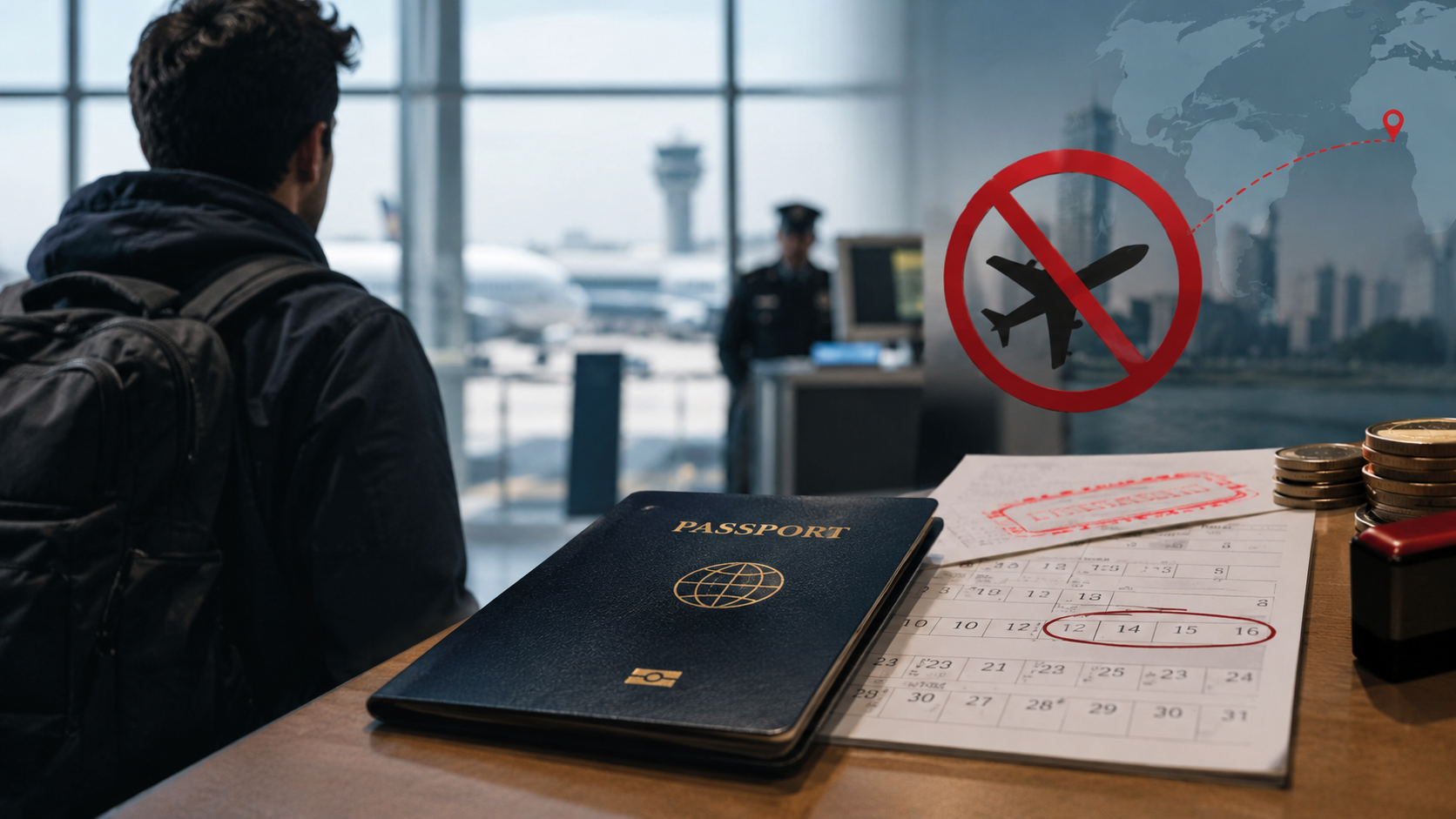
Most travellers think of an overstay as a fine paid at the airport on the way out. In many countries that is only the start. Overstays can lead to bans on returning that last for years, to deportation, and to a record that resurfaces every time the traveller applies for a visa anywhere.
Daily penalties that compound
The first consequence is usually financial, and it usually accrues by the day. The UAE, Oman, Kuwait and Thailand all charge overstay penalties for every day spent beyond the permitted stay. Some countries cap the total; others do not.
A one-day overstay is an irritation. A month is a substantial sum, and because it is collected on departure, the traveller often cannot leave until it is paid.
In Oman, official UK advice notes that overstayers can also be detained.
Bans scaled to the length of the overstay
Thailand publishes its approach in detail, and it shows how quickly a fine becomes a ban.
A traveller who overstays by more than 90 days and hands themselves in faces a one-year ban on re-entry. More than a year means five years. More than five years means ten.
A traveller who is arrested rather than surrendering faces longer bans for shorter overstays: five years for an overstay of up to a year, and ten years beyond that.
The United States: three and ten years
United States law sets two thresholds. A person who accrues more than 180 days of unlawful presence but less than a year, and then leaves, is barred from returning for three years. A year or more triggers a ten-year bar.
These bars are triggered by departure, which surprises people: leaving is what starts the clock on the ban.
Deportation
In Central Asia and elsewhere, overstaying can lead to deportation rather than a quiet exit. Kyrgyzstan's rules, for example, provide for a fine and deportation. A deportation is a formal record, not just an inconvenience.
The record that follows you
This is the consequence travellers most underestimate. Visa application forms in many countries ask whether the applicant has ever overstayed, been refused entry or been deported, anywhere.
An overstay in one country therefore shows up in an application to another. Answering no when the answer is yes is treated as misrepresentation, which is usually a more serious problem than the overstay itself.
How overstays actually happen
Rarely through deliberate defiance. The common causes are mundane.
Counting days wrongly. Many countries count the arrival day as day one, so a 30-day stay ends a day earlier than travellers expect.
Choosing the wrong visa length. A short default visa chosen for a trip that later grew.
Assuming a rule has not changed. Thailand halved its visa-exempt stay in September 2026; Qatar ended its automatic visa extensions in June.
Flight disruption. A cancelled flight does not extend a visa. Travellers need to regularise their status, not wait it out.
What to do
Count the days before you apply, using the destination's own counting rule. Choose a visa that covers the whole trip with a margin.
If your plans change while you are there, extend or leave before the permission expires.
If an overstay has already happened, settle it properly and keep the paperwork. You will need to declare it honestly on future applications.
Verified against the US Code and USCIS Policy Manual, the Thai Immigration Bureau, the UAE Federal Authority for Identity and Citizenship, and UK FCDO Oman and Kyrgyzstan entry requirements, checked 1 October 2026.