How to Tell a Legitimate Visa Service From a Scam Site: A Traveller's Checklist
 Jackson ReedSeptember 10, 20264 min read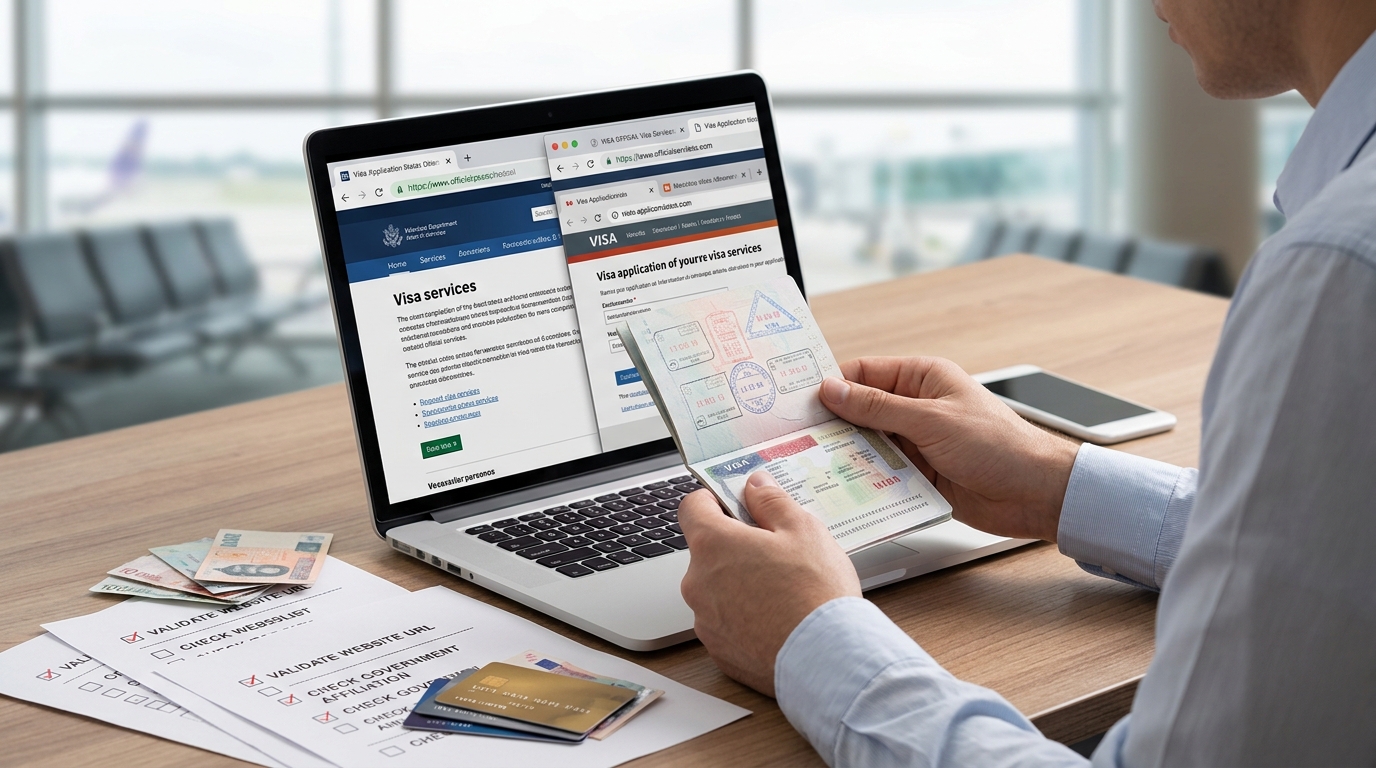
Governments around the world publish warnings about fraudulent visa websites. The warnings are real and the problem is large. But the advice attached to them is often reduced to something unhelpful: that any site which is not a government site is a scam.
That is not what the warnings actually say, and it leaves travellers with no way to tell a real service from a fake one. Here is a practical test.
What do the government warnings actually describe?
Read them carefully and a consistent pattern emerges. Two things recur in every advisory.
The first is impersonation: sites presenting themselves as an official government body, or implying an official appointment they do not have.
The second is undisclosed cost: travellers discovering only after payment that they were charged far more than they expected, for something they did not understand they were buying.
The Indian consular advisory is representative. It publishes named copycat domains, and the objection in each case is the same: sites presenting themselves as official, and sites taking money without disclosing what is being charged or for what. The Australian authorities do the same, and give a price benchmark so travellers can recognise an inflated charge. Singapore's Immigration and Checkpoints Authority warns specifically that its arrival card is free and that sites charging for it are not official.
The checklist
Use these seven tests before you enter card details anywhere.
1. Can you identify who you are dealing with?
A legitimate operator names the company, states where it is registered, and gives a physical address. A site that will not tell you who it is has a reason.
2. Is the total cost shown before payment?
You should see the full amount, and what it covers, before you commit. Cost revealed only at the final step, or after submission, is the single most reliable warning sign in the government advisories.
3. Does it claim to be official?
Any site describing itself as a government body, an official portal, or officially appointed, when it is not, has disqualified itself. Legitimate services state plainly that they are an independent service.
4. Does it promise a guaranteed outcome?
No operator controls a government's decision. A guaranteed approval, or a promise that refusal is impossible, is a claim nobody can honour.
5. Is there a real support channel?
A named contact route with humans behind it, not just a form. When something goes wrong with an application, and sometimes it does, this is what determines whether you have recourse.
6. Is there a written policy on refusal?
Immigration authorities generally do not refund application charges on refusal. A legitimate service says so upfront and explains its own position clearly. Silence on this point means you will find out the hard way.
7. Is there false urgency?
Countdown timers, warnings that rules change tomorrow, artificial scarcity. Genuine visa deadlines come from governments and are published; they are not invented by a checkout page.
Is it wrong to use a paid service at all?
No, and the government advisories do not say it is. Millions of travellers use agents, tour operators and specialist services for the same reason they use accountants and travel agents generally: to have the work done correctly by someone who does it every day.
What the advisories object to is deception about who is providing the service and what it costs.
How we measure against it
We are an independent visa service, and we say so on every page rather than implying an official status we do not have.
Our pricing is all-inclusive and shown before you commit, with nothing added at checkout.
Our position on refusals is written down rather than buried.
And we are reachable by a named route when something needs attention, which is the point at which the difference between operators actually shows.
The point
The question is not whether a site charges. It is whether it tells you who it is, what it costs, and what it can honestly do.
Verified against published advisories from US Customs and Border Protection, the Consulate General of India in San Francisco, the Australian Department of Home Affairs and the Singapore Immigration and Checkpoints Authority.