The End of the Schengen Visa Sticker: What the EU's Digital Visa Will Change, and Why Not Yet
 Jackson ReedOctober 12, 20263 min read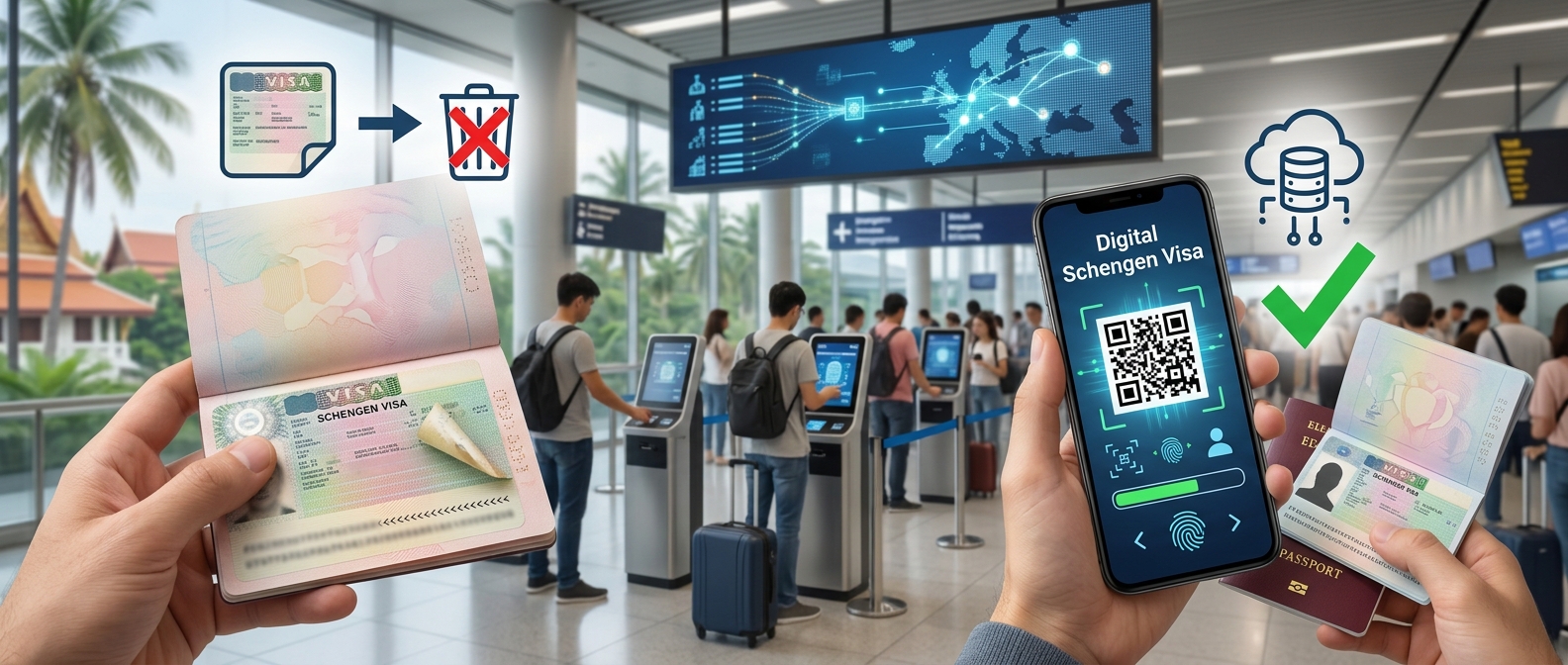
The Schengen visa sticker is on its way out. The European Union has adopted the law that will replace it with a digital visa and move applications onto a single online platform. What it has not done is switch the system on, and claims that the change arrives this year are wrong.
What the law says
Regulation (EU) 2023/2667 creates the EU Visa Application Platform. Once it is operating, short-stay Schengen visa applications will be made online through one EU-wide portal rather than through the separate systems run by individual member states and their contractors.
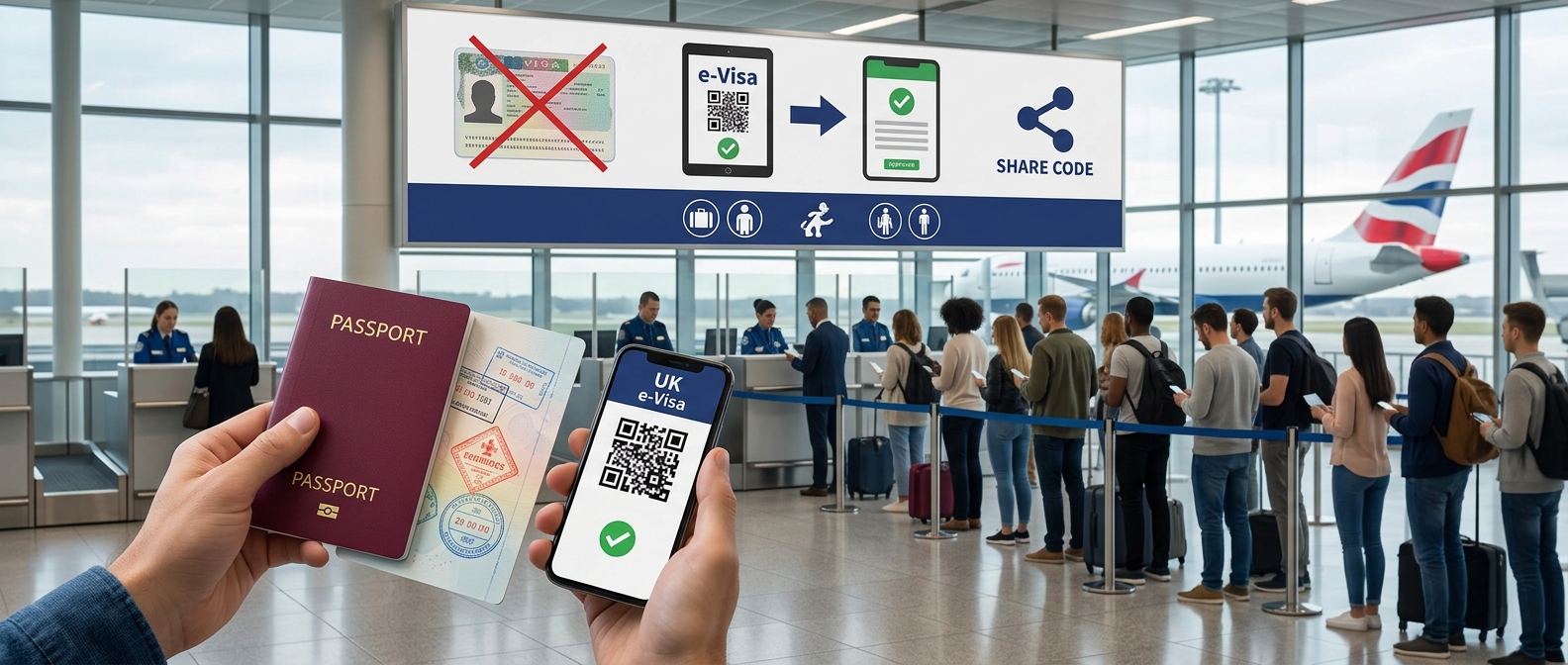
Successful applicants will receive a digital visa rather than a sticker in their passport. The visa will exist as a record that border guards and carriers can check electronically.
The platform will also run automated admissibility checks on applications before they reach a consulate: whether the form is complete, whether the applicant has applied to the right country, and whether the supporting information is present.
What changes for travellers
Four things, once the platform is live.
One portal. Applicants will no longer need to work out which country's system to use for a multi-country trip before they can start.
No sticker. The visa will not occupy a passport page, and there will be no need to collect a passport with a vignette in it.
Earlier rejections for incomplete applications. Automated checks will stop an application that is missing something before it is assessed, rather than after weeks in a queue.
Digital checks at the border and at check-in. As with the UK's eVisa, the passport will no longer show the permission. The check will be made against the record.
What does not change
The visa itself. The conditions for a Schengen visa, the documents applicants must provide, and the assessment by consular officers remain. Digital does not mean easier to obtain.
Biometrics. First-time applicants will still need to give fingerprints in person.
The 90 days in any 180-day rule for short stays.
So when does it start?
No start date has been announced.
The agency that builds the EU's large border and visa systems, eu-LISA, published its planning document for 2026 to 2028 in July 2026. It describes the platform as in development, says work on it begins in 2026, and plans maintenance from 2028. That is a planning marker, not a launch date.
The European Commission has not adopted the decision that would set the date operations begin. Until it does, there is no official start.
Even then, the switchover will not be immediate everywhere. The regulation gives member states a transitional period after the platform begins operating before they must use it, so stickers and digital visas will coexist for some time.
Why the confusion
Three EU border projects have been running in parallel, and they are easily conflated.
The Entry/Exit System replaced passport stamps for non-EU travellers and is already operating.
ETIAS, the travel authorisation for visa-exempt travellers, is planned but not yet in operation.
The digital visa is a third, separate project, and it is the furthest from launch.
Articles that describe the digital visa as arriving in 2026 have usually mixed it up with one of the other two.
What should travellers do now?
Apply for Schengen visas the way they are issued today: through the consulate or its appointed provider, with a sticker issued in the passport.
Do not delay an application waiting for the digital system. It is not close enough to plan around.
Keep the passport that holds a valid Schengen sticker. Until the digital system is live, the sticker is the visa.
Verified against Regulation (EU) 2023/2667 on EUR-Lex and the eu-LISA Single Programming Document 2026 to 2028, checked 1 October 2026.