Why Visa Applications Fail at the Payment Step, and How to Avoid Losing the Money
 Jackson ReedAugust 20, 20263 min read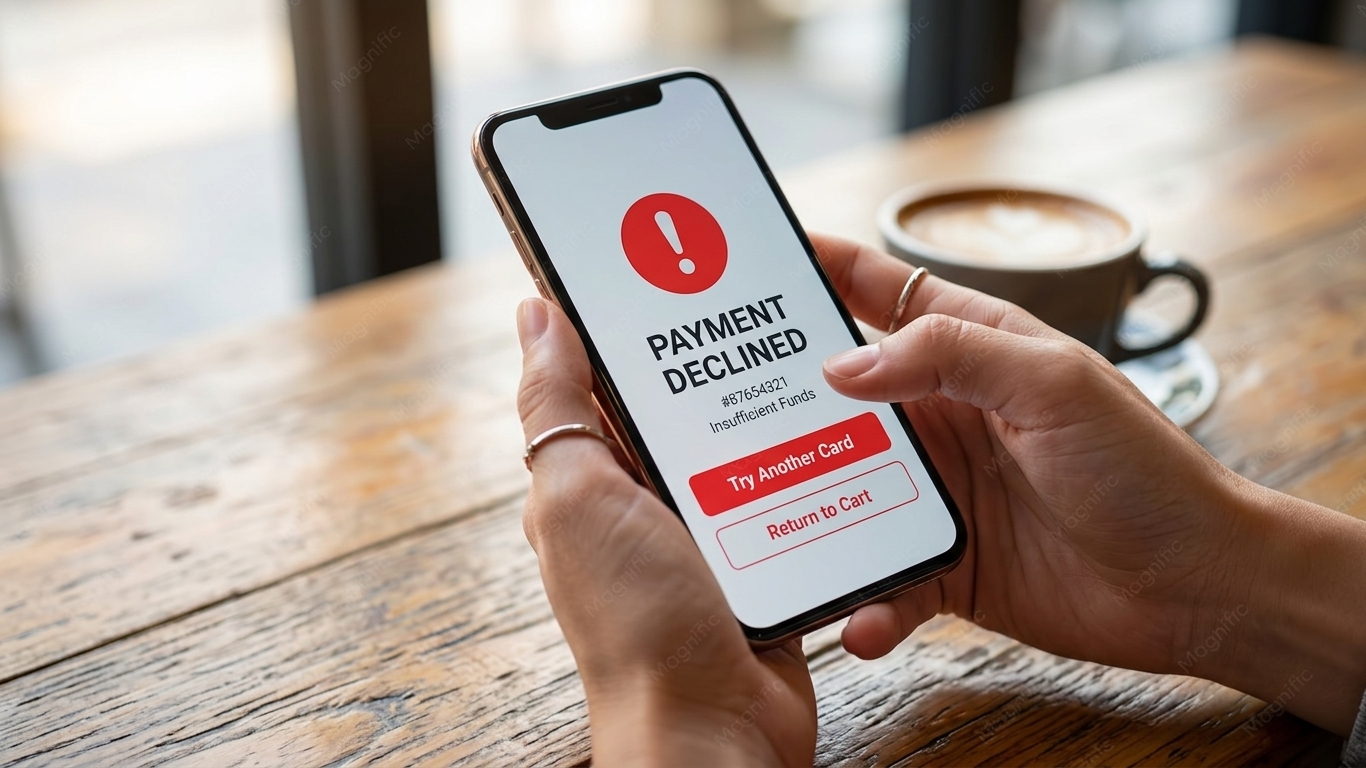
Payment is where a surprising number of visa applications collapse. The form is complete, the documents are uploaded, and then the transaction fails, sometimes silently. Here is what actually goes wrong, and what it costs.
My card was declined. Is something wrong with my application?
Usually not. The most common cause has nothing to do with your eligibility. Government payment gateways do not all accept every card network. Several major immigration portals accept only a narrow set of networks, and some widely-held cards, American Express among them on more than one government system, are simply not on the accepted list.
The application itself may be perfectly sound. The payment rail just does not support the card you tried.
Why do some cards work on one country's system and fail on another?
Because each government contracts its own payment processor, and each processor supports a different set of networks. There is no common standard across immigration authorities. A card that worked for one country's e-visa last month can fail for another country's this month, and neither outcome tells you anything about your travel history.
Some gateways also handle international cards inconsistently depending on how the card's security authentication is configured with your bank.
I paid and the application was refused. Do I get the money back?
Generally, no. This is the single most expensive misunderstanding in the process.
Most immigration authorities treat the application charge as payment for processing the application, not for granting the visa. Several state this explicitly: Vietnam's national e-visa system, for example, confirms the amount is not refunded if the application is refused.
A refusal therefore costs you the charge and the time, and you start again from the beginning.
What if I am not sure whether my payment went through?
Do not immediately resubmit. Duplicate submissions are a real problem: travellers who assume a failed transaction means a failed application sometimes end up with two live applications and two charges, and untangling that is slower than waiting.
Check for a reference number and a confirmation message first. If neither arrived, verify with your bank whether the amount was actually taken before you try again.
Can I get a refund if the rules change after I pay?
Not usually, and authorities are increasingly explicit about it. When Sri Lanka changed the terms of its tourist authorisation with effect from 25 May 2026, the Department of Immigration and Emigration stated that charges paid before the effective date were neither refundable nor creditable against the new arrangement.
The lesson generalises: paying early does not protect you against a rule change, and it does not entitle you to the benefit of one.
What actually reduces the risk?
Three things.
Have a second card available on a different network before you start, so a decline does not strand a half-finished application.
Get the application right the first time. Because the charge is not refunded on refusal, the real cost of an error is the charge plus the delay plus a second charge, not just the inconvenience of resubmitting.
Do not leave it to the last week. If a payment fails and you need to resolve it with your bank, you want that to happen with weeks in hand, not days.
The underlying point
A visa application is a transaction with no refund and, in many countries, no appeal. The payment step is where an avoidable technical problem turns into a real financial loss. Treating it as an afterthought is how travellers end up paying twice.
Verified against official immigration authority payment terms published by the governments of India, Indonesia, Vietnam and Sri Lanka.