
Do you remember the pink sandstone cliffs from the famous film Indiana Jones and the Last Crusade? That unforgettable city is Petra. It is called the world-famous “Rose City” that is carved into the sandstone cliffs of southern Jordan.
When the first ray of the sun hits the Treasury, the soft light makes this ancient city glow like it’s alive. It’s no wonder Petra is one of the New Seven Wonders of the World. For history lovers, photographers, and adventure seekers, Petra offers a timeless journey into the heart of Nabatean civilization.
Today, visiting Petra is easier than ever with the Jordan eVisa. As the process is entirely online, there are no more long embassy lines or complicated paperwork. Your eVisa can be approved and sent straight to your inbox.
Before you pack your bags, here’s everything you need to know about exploring Petra and getting your Jordan eVisa.
Why Petra Should Be on Your Travel Bucket List
Words can’t truly describe the beauty of Petra unless you physically go there and observe this breathtaking place with your own eyes to believe it. We’ve pointed out 3 reasons why this ancient wonder deserves a top spot on your travel list:
- Historical Significance
Petra wasn’t built in a day or even a century. This ancient city has roots going back around 312 BC when it became the capital of the Nabataeans. It was a rich civilization that managed water in the desert with clever channels, dams, and cisterns.
It served as a vital trading hub that linked Arabia, Egypt, and the Mediterranean. Caravans loaded with spices, silks, and incense once passed through Petra’s narrow streets.
While walking through Petra today, you can almost hear echoes of ancient traders bargaining and camels’ footsteps in the sand.
- Cultural Impact
Petra’s charm isn’t only in its history. It’s an UNESCO World Heritage Site and has captivated the imagination of filmmakers and travelers alike.
Famous movies like Indiana Jones, The Mummy Returns, The Martian, Dune, Star Wars, and many more used Petra as a backdrop and presented its dramatic architecture to the world.
Even centuries after its peak, Petra continues to influence artists, photographers, and storytellers who want to capture its unique beauty.
- Visual Spectacle
The Rose City Petra glows in shades of pink, orange, and red. The city’s carved facades, tombs, and temples rise from mountains that twist through desert canyons.
You can see the breathtaking ancient rock carving right in front of you, with narrow pathways on one side and hidden viewpoints on the other. Everywhere you look, each turn brings a new sight to admire.
Photographers come here for the golden light, and travelers for the touch of the desert breeze. But everyone leaves with memories of Petra’s unforgettable views.
Thanks to Jordan eVisa, visiting this wonder has never been easier. You can apply at least a week before your trip and step directly into history, skipping the hassle of embassies and long lines.
Planning Your Journey to Petra
A proper guideline and a little preparation can make your journey to this ancient city smooth, stress-free, and help you gather unforgettable experiences. Here’s a simple guide to help you reach Petra without any hassle.
How to Go There
Right now, traveling to Petra is the easiest thing you’ve ever done. Here are the quick 3 steps:
Step 1: Get Your Jordan eVisa
If you’re from an eligible nationality, you can apply for an eVisa. So, simply check if your country is eligible to get an eVisa for Jordan. If yes, simply visit the Jordan eVisa, select your nationality, and fill out the secure online form with accurate information.
You may need to provide your passport number, personal details, and travel information. After paying the fees using your credit or debit card, your eVisa will arrive directly in your email, usually within 24 to 96 working hours.
Step 2: Show your eVisa at Immigration
Upon arrival at Queen Alia International Airport in Amman, present your eVisa at immigration. While a digital copy of your eVisa works, keep both a digital and printed copy to avoid any delays and ensure smooth entry. Once cleared, you’re officially ready to start your Petra adventure!
Step 3: Travel to Petra
From the airport in Jordan’s capital, Petra is about 220 km (137 miles) south. This can take a three-hour drive. You can reach Petra using public buses, private cars, or guided tours.
Public transportation is convenient and affordable, but if you prefer comfort and flexibility, a private car or taxi is the best option. Guided tours offer local knowledge and historical insight. So, it can be the best choice if you’re visiting there for the first time.
Meilleure période pour visiter
Petra is a year-round destination, but the ideal months to visit this place are Mars à mai et September to November. During these months, the weather is cooler and crowds are smaller. Summer can be extremely hot. In daytime, temperatures exceed 40°C / 104°F. And winters can be chilly in both the mornings and evenings.
For a truly magical experience, don’t miss Petra by Night. On selected evenings, the Treasury is lit by thousands of candles. Also, the candlelit paths guide visitors through the Siq to the Treasure. The soft glow of candlelight combined with the desert silence creates a memorable and almost mystical atmosphere.
Top Attractions Inside Petra
Petra is much more than just the Treasury. Inside this ancient city, you’ll find a network of narrow canyons, towering tombs, majestic temples, and panoramic viewpoints. Each corner tells a story of the Nabatean people, their culture, and incredible architectural skills. Although there are countless attractions in Petra, here are some of the top ones:
Vidéo Courtesy @NatGeo
The Siq
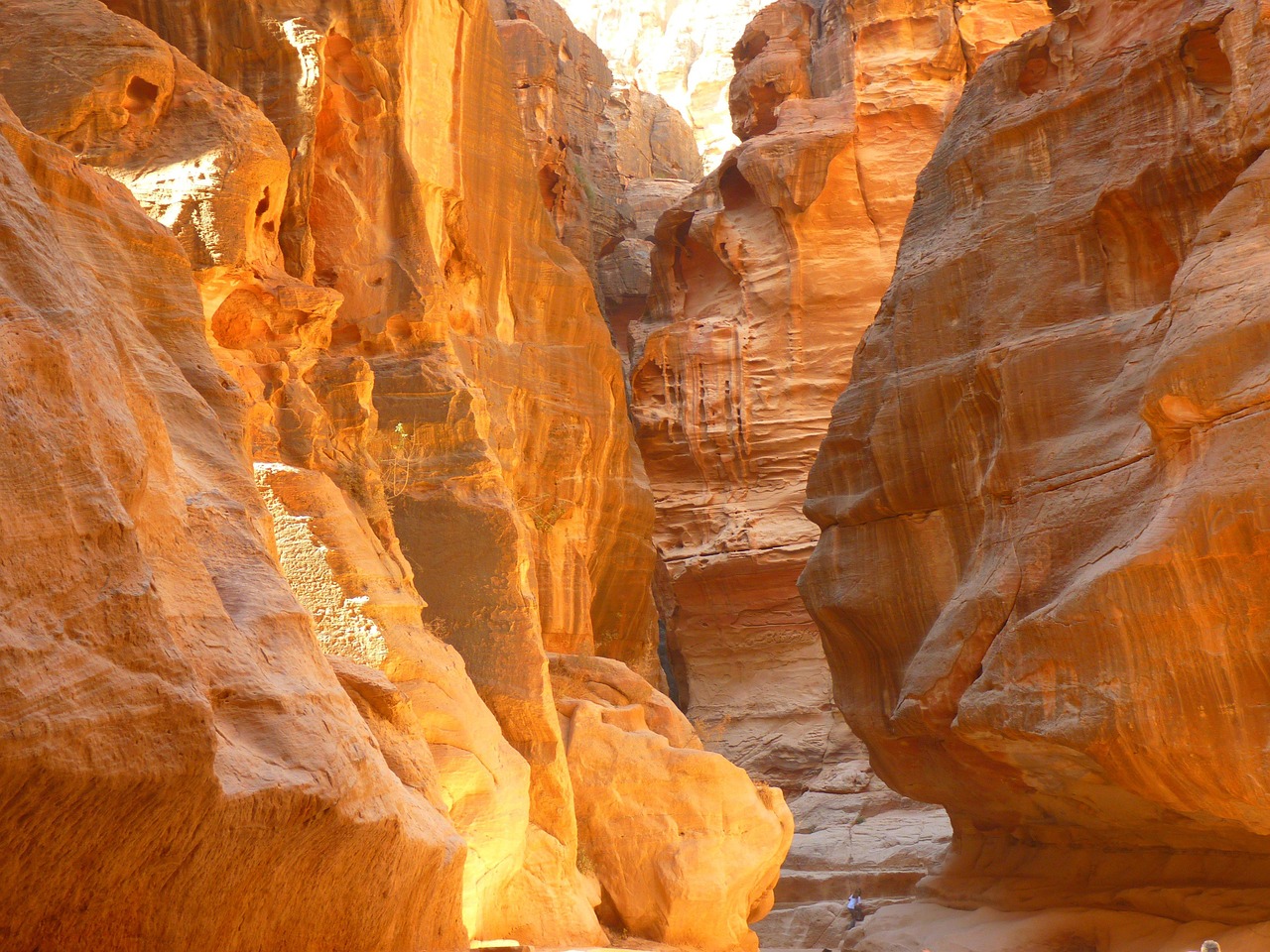
Le Siq is a 2 km narrow canyon leading to Petra’s Treasury. It formed naturally from a mountain split. Nabataeans also carved an 88-meter tunnel to redirect flash floods from Wadi Musa. A triumphal arch once marked its entrance but collapsed in 1895. Walking through this historic path builds anticipation, with the towering cliffs rising on each side.
The Treasury (Al-Khazneh)
As the Siq opens up, you finally see the Al-Khazneh. Known as the Treasury, this is Petra’s most iconic monument. The height of the Treasury is 39.5 meters (130 ft) from the ground. It was likely built during King Aretas IV’s reign (9 BC – 40 AD) and served as a mausoleum. Excavations in 2003 revealed Petra’s rich funerary history by uncovering the three royal tombs beneath. Its intricate facade, carved directly into red sandstone, is truly breathtaking. Early morning or sunset is the best time to visit this magical place.
The Royal Tombs & Street of Facades
Connu sous le nom de Tomb with the Armours, this monument sits in the Moghar en Nasara necropolis and was built between the first century AD to first century BC. Visitors approach it via a long staircase. The nearby Street of Facades, with 12.5 meters wide and 19 meters high, displays more than 600 carved facades. Walking along this street feels like stepping into a lost civilization, where every stone has a story.
The Monastery (Ad-Deir)
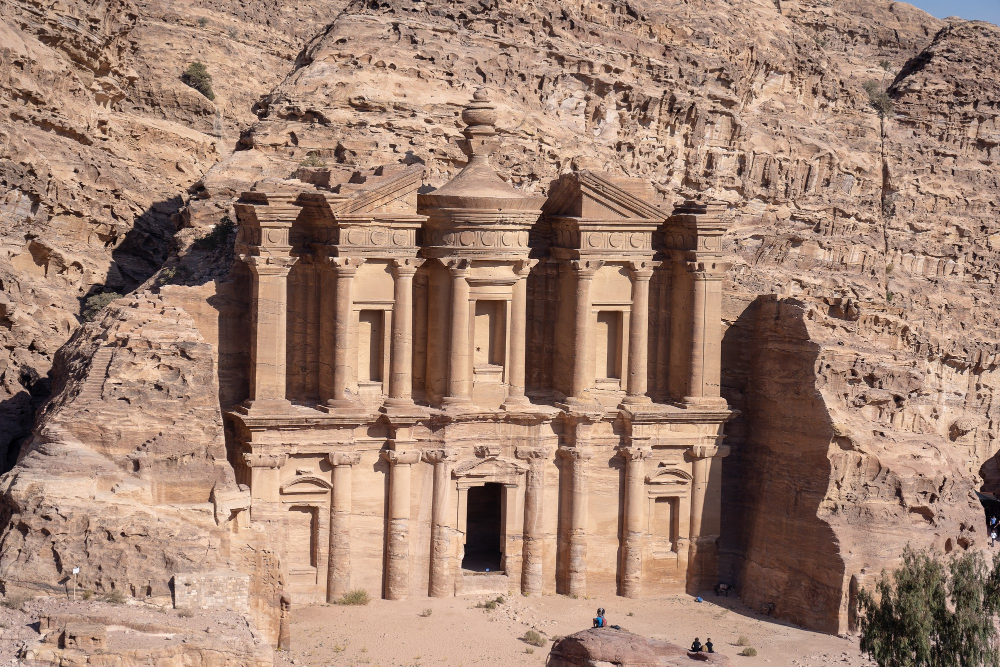
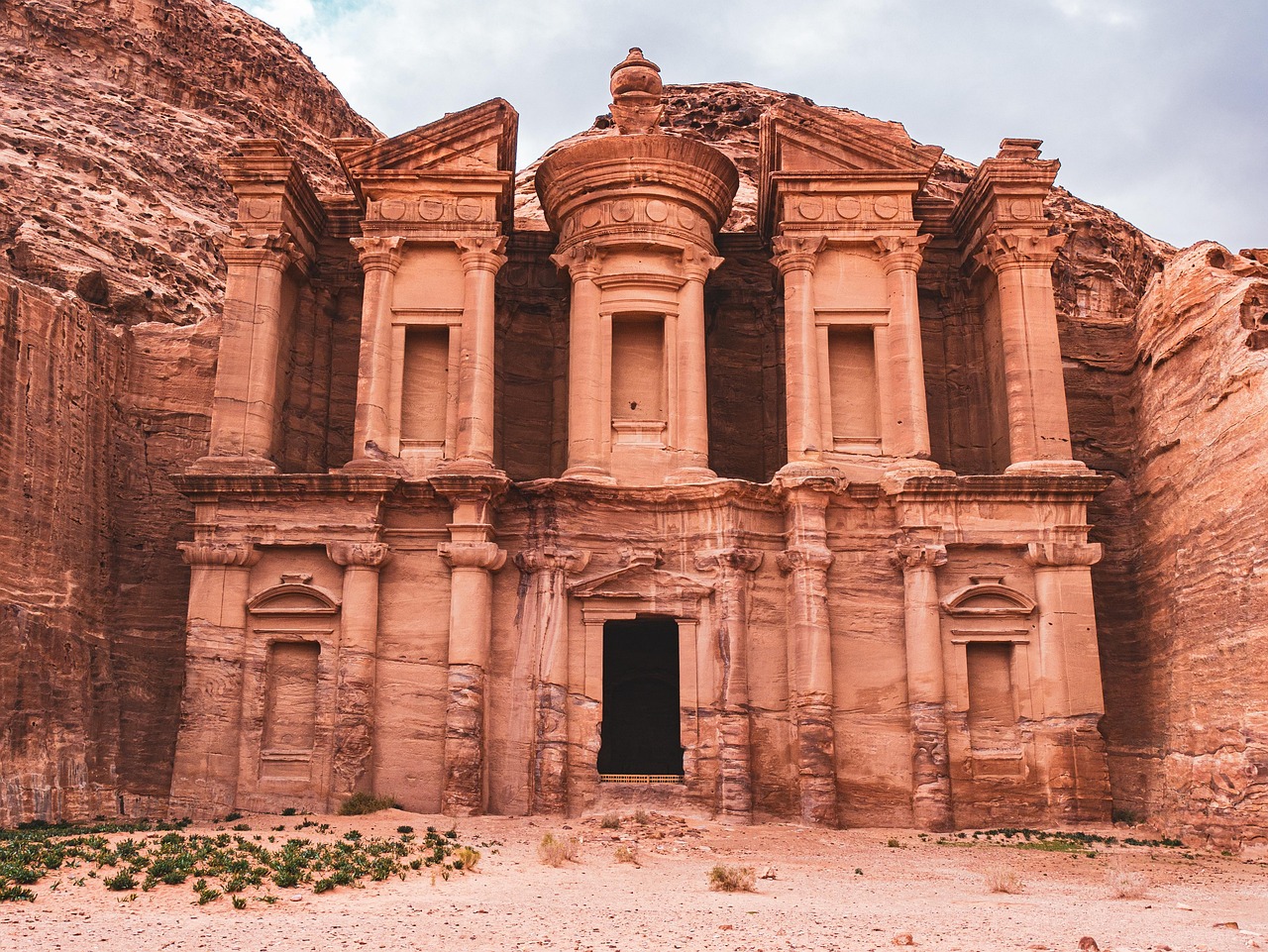
A bit further, you’ll encounter the Monastery. It is larger than the Treasury (46.77 meters wide and 48.3 meters high) and accessed via a climb of about 900 steps. From the top, the panoramic view of the surrounding desert is absolutely stunning. This sis a perfect spot to rest, take photos, and enjoy the vastness of the Jordanian landscape.
The High Place of Sacrifice
For those willing to explore further, the High Place of Sacrifice offers wide-angle views of Petra, Wadi Musa, and Aaron’s Tomb. This ancient ceremonial site is where the Nabateans concocted religious rituals. The climb may be challenging, but the reward is a breathtaking perspective of the city’s layout and surrounding mountains.
Petra Museum
To understand the history behind the rock, visit the Petra Museum. Modern exhibits display Nabatean tools, pottery, and trade items. Maps of ancient trade routes help visitors understand how Petra connected Arabia, Egypt, and the Mediterranean that turning a desert into a powerful trading hub.
Travel Tips for Visiting Petra
Before exploring the ancient wonder of Petra, a little preparation can make your trip smoother and more enjoyable. Here are some practical tips:
- Shoes & Clothing: Petra involves long ways, uneven paths, and climbing steps. So, wear comfortable walking shoes and lightweight breathable clothing.
- War & Sun Protection: Shade is limited inside Petra. So, bring plenty of water, sunscreen, and a hat.
- Local Guide: Guides add depth to your visit, telling stories of the Nabateans and explaining hidden carvings.
- Photography Tip: Early morning light enhances Petra’s pink hues and can give your photos a magical glow.
- Respect Local Laws: Remember, Petra is not only a tourist site but a cultural treasure. Follow the rules and avoid touching the carving.
Where to Stay Near Petra
Petra offers accommodations for every type of traveler.
- Luxury: Movenpick Resort Petra and Petra Marriott Hotel are conveniently located near the main gate and offer modern amenities with easy access to Petra.
- Mid-range: Hotels like Petra Moon Hotel and P Quattro Relax Hotel provide comfort without breaking the budget.
- Budget: You can choose Nomads Hotel Petra or Valentine Inn, which offer basic amenities and easy access to Petra.
- Unique Stay: For an authentic desert experience, stay in a Bedouin camp around Wadi Musa, where you can enjoy the traditional desert lifestyle under the stars and experience the warm Bedouin way of life.
Food & Local Flavors to Try
The foods of Petra not only look delicious, but their flavors are equally unforgettable. Here are some of the food items you must try.
- Mansaf: This is Jordan’s national dish. It consists of lamb cooked in a yogurt sauce and served over rice or a burger.
- Makloubeh: It’s an upside-down rice and meat dish. This one is rich in spices and flavors.
- Falafel & Hummus: These two are popular street foods in Wadi Musa. These are perfect for a quick snack while exploring.
- Bedouin Tea: This traditional black tea is served with mint. It’s a symbol of hospitality and perfect for relaxing after a day in Petra.
Conclusion
Petra is not just a city carved in stone, it’s a living monument of history, culture, and ancient skills. Here, every path, every tomb, and every canyon tells a story. With the Jordan eVisa, your journey to Petra has now become smooth, fast, and stress-free. Whether you’re traveling alone, with family, or as a history enthusiast, Petra always promises unforgettable memories. Apply for your Jordan eVisa today, and take your first step into one of the world’s most breathtaking archaeological wonders.