
Employer-Sponsored Residency in Australia

Australia’s Employer-Sponsored Residency is designed for skilled professionals who have received a job offer from an approved Australian employer. This pathway enables foreign workers to contribute directly to Australia’s workforce, with a clear route to permanent residency. Whether you’re in healthcare, IT, engineering, or trades, employer sponsorship offers a secure and stable pathway to building a long-term life in Australia.
This residency route is available through temporary residency like Subclass 482, which can lead to permanent residency via Subclass 186 or Subclass 494. It’s a favored option for skilled individuals who want to settle in Australia with the support of a verified employer.
Here’s what you need to know about the Skilled Migrant Category Residency in Australia:

Key Benefits
- Employer-backed support provides stability and job security.
- Option to transition from temporary to permanent residency.
- Access to healthcare, education, and social services.
- Ability to include your family members in the application.

Key Requirements
- A full-time job offer (minimum 38 hours/week) from an approved Australian employer.
- Occupation must be listed on the Skilled Occupation List (MLTSSL or STSOL).
- Meet English language standards (typically IELTS 6.0 or equivalent).
- The salary offered must meet the market rate (usually AUD $70,000+ annually, depending on role and industry).
Why Choose the Employer-Sponsored Residency in Australia?
Australia’s employer-sponsored pathway offers long-term stability for professionals looking to secure residency through verified employment. Here’s why this route stands out:
Pathway to Permanent Residency
Transition from a temporary work residency (Subclass 482) to permanent residency (Subclass 186 or 494) after meeting employment and residency requirements.
High-Demand Occupations
Many critical industries in Australia actively seek international professionals, increasing your chances of employer sponsorship.
Employer Support Throughout the Process
Your sponsoring employer assists with the application, ensuring a smoother process and clearer documentation.
Family Inclusion
Your partner and dependent children can be included in your application, granting them access to Australia’s healthcare and education.
Work Rights and Social Benefits
Once you hold permanent residency, you’ll have full work rights and access to social support systems like Medicare and education.
Citizenship Pathway
After holding permanent residency for one year (and four years in Australia overall), you can apply for Australian citizenship.
Requirements for Employer-Sponsored Residency in Australia
To qualify for employer-sponsored permanent residency, applicants must:
- Have a valid job offer in an eligible occupation.
- Be sponsored by an Australian government-approved employer.
- Meet qualification and licensing requirements for the role.
- Demonstrate English proficiency (IELTS 6.0 or equivalent).
- Meet health and character standards.
- Be paid at or above the Australian market salary rate for the position.
The Process of Applying for Employer-Sponsored Residency in Australia
- Receive a full-time job offer in an eligible occupation from an approved employer.
- The employer nominates you for sponsorship through Subclass 482 or 494.
- You apply for the residency with supporting documents: qualifications, experience, English language test, health and character clearances.
- After working in the role for the required period (usually 2–3 years), you become eligible for Subclass 186 or 191 permanent residency.
- Upon approval, you receive permanent residency, with full rights to live and work in Australia.

Ready to Move to Australia? Check Your Eligibility Now!
Eligibility CheckRegistered Migration Agent (RMA)

Latif Mohammadi
Migration Agent Registration Number: 2518734
Officially registered with the Migration Agents Registration Authority (MARA) to provide trusted Australian immigration advice.
With years of experience and an in-depth understanding of Australian immigration law, our consultant offers personalized guidance for individuals, families, students, and skilled professionals.
Migration Highlights
Minimum Investment/Earning
Australia Skilled Migration Residency
– Minimum Income: AUD $76,515 per year (varies by role).
Points-based residency(Subclass 189, 190, 491) for skilled professionals. No job offer required for Subclass 189.
Australia Employer-Sponsored Residency
– Minimum Income: AUD $70,000+ or market salary rate.
Work residency pathways (Subclass 482, 186/494) for skilled workers with a job offer from an approved Australian employer.
Australia Business and Investor Residency
– Investment Amount: AUD $2.5 to $5 million over four years.
Apply under Subclass 188 and transition to PR via Subclass 888. Includes Investor and Significant Investor streams.
Property Requirement
– No general property purchase requirement.
Processing Time
– Most applications take 6 to 12 months.
Family Inclusion Option
– Spouses and dependent children can be included in all residency types.
Facts About Australia
Australia Embelum
Population
– Approximately 27 million (2025 estimate).
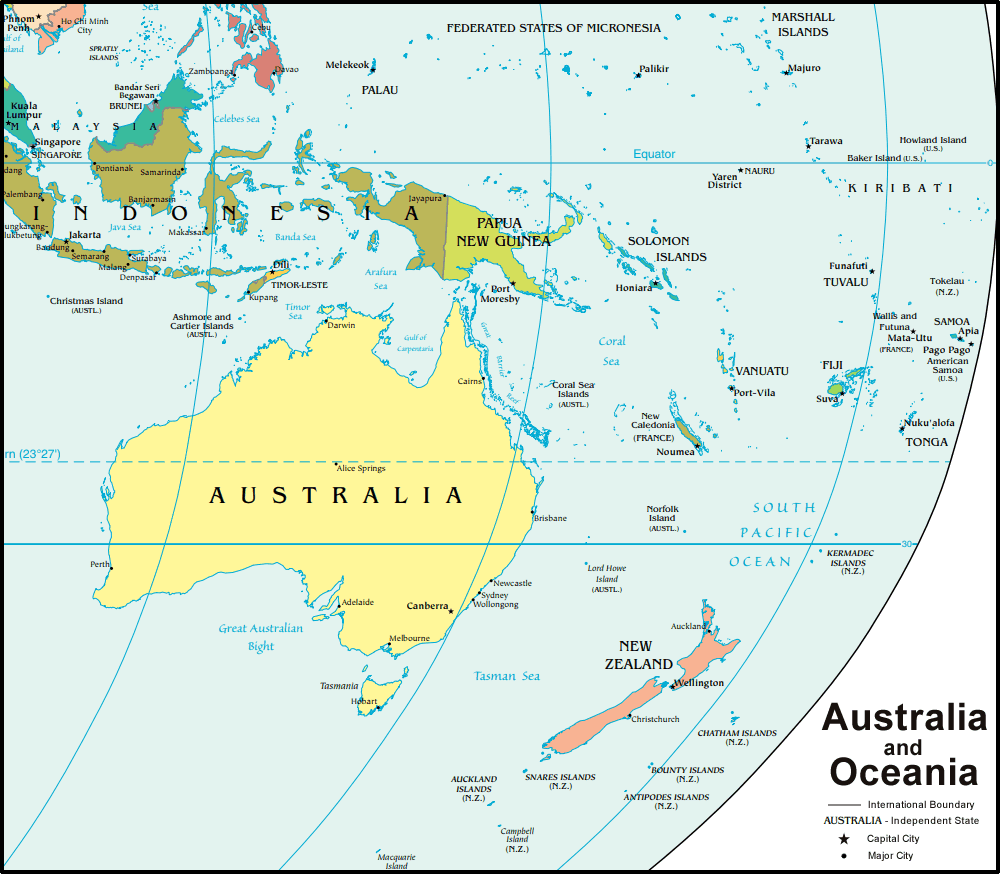
Location
– Oceania. A vast island continent located between the Indian and Pacific Oceans.
Passport Rank
– 6th globally (Henley Passport Index 2025).
Passport Mobility
– Visa-free or visa-on-arrival access to 190+ destinations worldwide.
Language
– English (official and primary language).
National Food
– Meat Pie and Lamingtons are iconic; Vegemite on toast is a cultural staple.
Government Links
Residency Information
Job Portals
House Rentals
Frequently Asked Questions
Do I need a job offer to apply for employer-sponsored residency?
Yes. A full-time job offer from an approved Australian employer is required.
How long does the process take?
Temporary residency processing (Subclass 482) can take 4 to 8 months. Permanent residency (Subclass 186) usually takes 6 to 12 months after eligibility is met.
Can I include my family in the application?
Yes, partners and dependent children can be included and receive the same residency benefits.
What happens after I receive my residency?
You can live and work permanently in Australia. You also gain access to Medicare and other public services. Eventually, you may be eligible for citizenship.
Is there an English language requirement?
Yes. Most applicants must show English proficiency, typically IELTS 6.0 or equivalent.
Do I need to be under a certain age?
For the permanent Subclass 186 Direct Entry stream, you must be under 45 years old. Age exemptions may apply in limited circumstances.
Can I apply for Australian citizenship later?
Yes. After four years of residence (including at least one year as a PR), you can apply for citizenship.
What documents are required?
You’ll need your job offer, passport, proof of qualifications, English test results, health checks, and police clearance.